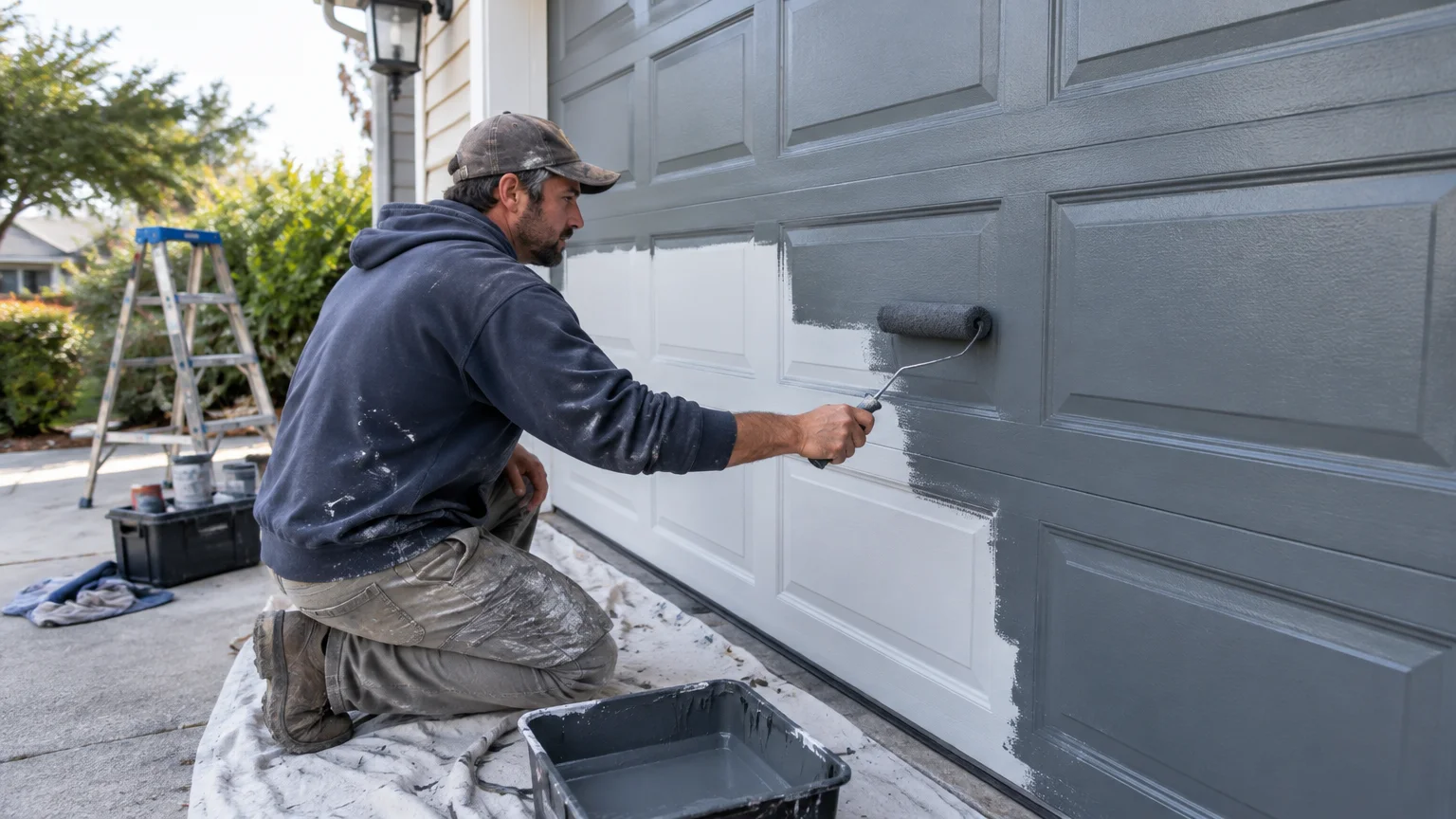
To learn how to paint garage doors, first check the door’s material and current finish. Clean and dry the surface, then choose primer and paint made for it. Paint only when the door is sound and safe to use. Repair damage first, and keep paint away from parts that need to move.
Can you paint any type of garage door?
Many garage doors can be painted when the surface is in good shape and the new paint suits the material. First, find out what the door is made from and what covers it now. It may have paint, a factory coating, or a clear finish. The door’s care guide can help you choose what to do.
How do you identify the door’s material and existing finish?
Steel doors often have a smooth, coated surface. Wood doors may show grain, joints, or old paint. Other doors can be made from aluminum, vinyl, or composite materials. These may need special paint, and some may not hold a new coat well. Do not guess if the surface looks unusual or has a shiny factory finish. Check the maker’s care advice before sanding or painting.
A small test in a hidden spot can help show if paint will stick. Follow the paint label and let the test dry fully. If the paint wrinkles, peels, or does not stick, stop. Ask a paint supplier for advice before you cover more of the door.
When should you repair or replace the door instead?
Paint can change color, but it cannot fix damage. Deep rust, a dented panel, split or soft wood, or rough movement needs care first. A repair pro can check if one panel can be fixed or replaced. They can also advise if Garage Door Maintenance or a new door is the right choice.
A door that is off its track, has a loose cable, or has a broken spring should not be painted yet. Springs and lift cables can be under strong tension. They can cause serious harm if handled the wrong way. Paso Robles Garage Door Repair helps property owners check doors with damage or movement problems.
How should you prepare a garage door for painting?
Good prep helps paint stick and can help the finish last. The door should be clean, dry, and in good repair before you start. Each door and paint can have different needs, so follow the maker’s directions. That advice should guide your choice of cleaner, primer, and paint.
What cleaning, sanding, and masking does the surface need?
Wash off dust, dirt, and grease with a cleaner that is safe for the door. Rinse away any leftover cleaner and let the surface dry fully. Scrape loose paint with care. Sand rough spots only when needed, and do not sand through a factory coating or damage the material.
Wear safety glasses and a dust mask when scraping or sanding. Old paint may contain lead, a harmful metal. If you think it might, do not sand or scrape it until a trained pro has checked it. Cover windows, handles, trim, nearby walls, the driveway, and plants to guard against dust and drips.
How do you protect moving parts and prepare the work area?
Keep paint off hinges, rollers, tracks, springs, cables, locks, and the garage door seal. These parts need to move or close tightly. Paint can make parts stick or wear unevenly. Never loosen a spring, cable, or bottom bracket to make painting easier. These parts can cause serious injury if handled the wrong way.
Make sure the work area has fresh air and enough room to open and close the door safely. Keep children and pets away while paint is wet. If you need to raise the door to reach a spot, follow the maker’s safety advice. Never work under a door that is not held safely. If the door feels heavy, slips, or moves unevenly, arrange a repair first.
How do you paint a garage door for an even finish?
A smooth finish starts with products made for the door’s material. Apply thin, even coats and follow the paint and primer labels. The labels tell you how to prepare the surface, how long to let paint dry, and which weather conditions are safe. Do not paint in rain or strong wind, or when the weather is outside the stated range.
Which primer and paint are suitable for the door material?
Choose primer and paint that say they work on the door’s material and current finish. Bare metal, wood, and old paint may need different products. Some factory coatings need a bonding primer. This is a primer that helps new paint grip a smooth surface. If the labels are unclear, ask the paint maker or a local paint supplier before painting the whole door.
Primer can help paint stick and cover bare spots or stains. Let it dry as the label says. Use outdoor paint made for the door’s material and weather exposure. Paint that does not suit the surface may peel, crack, or fade sooner. The product label is a better guide than a general rule for every door.
How should you apply paint to panels, edges, and trim?
A homeowner can paint a sound door by following the product directions and working in a steady order. A brush can reach corners and panel edges. A small roller can cover wide, flat spots. Use thin coats, and keep paint out of tracks and moving parts.
- Check that the door is clean, dry, and safe to use.
- Apply the right primer and let it dry as directed.
- Paint the panel edges and dips, then cover the wide faces.
- Look for drips and missed spots while the paint is still wet.
- Let each coat dry as directed before adding another coat or using the door.
Follow the label for the number of coats and drying time. Do not move the door while paint is wet or sticky. If the door is hard to lift, noisy, or uneven, stop using it and arrange a repair. Paint cannot fix a door that is out of balance or an opener that is worn.
When should you avoid painting a garage door?
Wait to paint if the door is damaged, wet, dirty, or unsafe to use. Also wait if you cannot identify the surface or old coating, or if the product label says the paint is not suitable. A rushed coat may peel and make later repairs harder.
How can peeling paint, rust, or damage affect the result?
New paint needs a sound surface under it. Loose paint gives it a weak base, and rust may keep spreading beneath the new coat. Soft wood or damaged panels may need repair first. A fresh coat can also hide cracks or other signs of trouble. Fix what caused the damage before covering it. A repair pro can check bent panels, worn rollers, or a door that has left its track.
You do not need a pro for basic cleaning, safe masking, or simple painting on a sound door. But springs, cables, bottom brackets, and off-track doors need trained help. These jobs involve heavy parts or tension and need the right tools. Paso Robles Garage Door Repair serves Paso Robles and nearby areas and can help check a door that does not open or close safely.
What maintenance helps keep a painted door looking good?
Wash the door when dirt builds up, and look for chips, peeling paint, or rust. Once the surface is clean and dry, touch up small flaws with paint that suits the door. Keep the garage door seal clear of paint. Follow the door maker’s care advice for cleaning and upkeep.
A door that moves quietly also needs working rollers, hinges, tracks, and opener parts. You can listen for new scraping or squeaking and look for clear signs of wear without taking parts apart. Follow the maker’s advice for lubrication, which means adding a suitable product to help parts move. Use only a product approved for those parts. If the door still makes noise, jerks, stops, or hangs unevenly, arrange an inspection. Do not try to adjust springs or cables.
Frequently Asked Questions
Can a homeowner paint a garage door without removing it?
Often, yes. Many doors can be painted while they are still in place, if they are steady and safe to use. Cover nearby surfaces and keep paint off tracks, rollers, springs, cables, and seals. If the door is damaged or moves unevenly, have it checked before painting.
What kind of paint works on a metal garage door?
The right paint depends on the metal, its current coating, and the maker’s instructions. Choose primer and outdoor paint that both say they suit the surface. A small test in a hidden spot can help you check if the paint sticks. If you do not know what the old finish is, or the test fails, ask a paint supplier before going on.
Should garage door panels be repaired before painting?
Yes. Have damaged panels checked before you paint them. Paint cannot straighten a bent panel, stop rust from spreading, or fix a door that has left its track. A repair pro can say if the panel can be fixed or needs to be replaced. They can also check that the door works safely.
Can painting make a noisy garage door quieter?
No. Paint changes how a door looks, but it does not fix noisy rollers, hinges, tracks, or an opener. You can look for dirt or clear damage and follow the maker’s care advice. Ongoing noise, jerking, or uneven movement means the door should be checked by a repair pro.
Key takeaways
- Match primer and paint to the door’s material and current finish.
- Clean and dry the surface, then follow the product label.
- Keep paint off springs, cables, tracks, rollers, and seals.
- Fix rust, loose paint, and door damage before painting.
- Leave tensioned parts and unsafe repairs to trained pros.
Conclusion
Paint can freshen a garage door when the surface is sound and the products fit. Careful prep matters more than rushing. Homeowners can handle basic cleaning and painting, but should not adjust springs, cables, or other parts under tension. If the door is damaged, noisy, or unsafe, Contact us today before you begin painting.
In Paso Robles, a quick check can help you know whether the door is ready for paint or needs repair first. Paso Robles Garage Door Repair can help you understand what to do next.
If you are not sure what you are dealing with, it is worth having someone look at it before it turns into a bigger job. Get in touch with Paso Robles Garage Door Repair today and we will tell you where you stand.